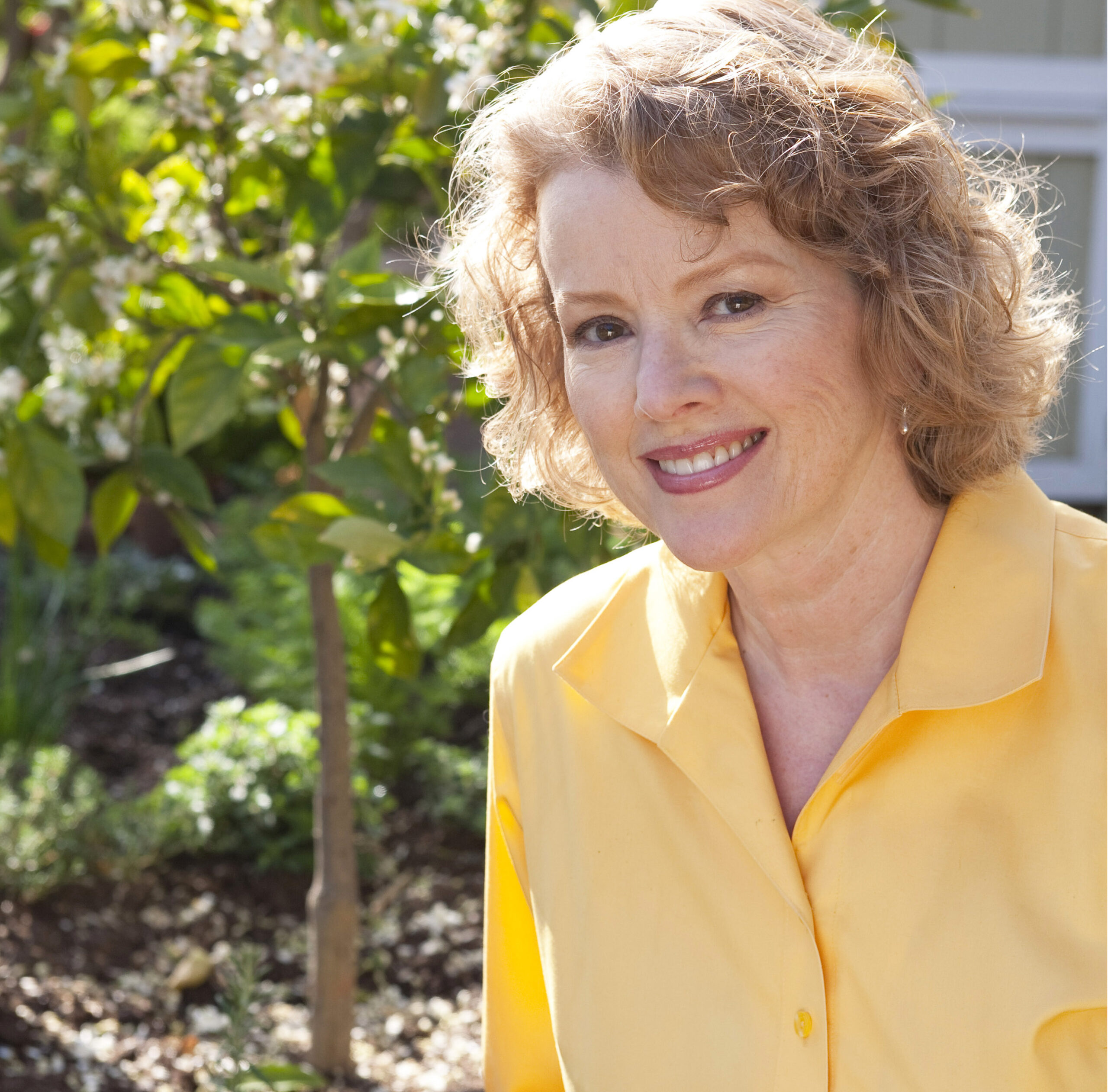
“We need all the bees we can get,” a commercial beekeeper told me at the California State Beekeepers Association annual convention this week in Valencia, California. I had been invited by CSBA Ladies Auxiliary president Melinda Nelson, a beekeeper I’d met when I spoke at the Orange County Organic Gardening Club in May, to be the guest speaker at the auxiliary luncheon. My charge was to inspire attendees on organic food gardening, which goes hand-in-hand with beekeeping. Since I arrived the night before, I had a chance to learn a lot more about bees.

The convention welcomes commercial beekeepers with thousands of hives, to the hobbyist beekeeper with only a handful. I asked a beekeeper in passing if the hobbyist beekeepers were treated equally, and that’s when he said, “Yes, we need all the bees we can get.” I heard that more than once! Bees are imperiled and though beekeepers are a very friendly bunch, there was an air of concern about what the future holds, for the almond and fruit growers who depend upon bees, to the beekeepers and their ladies.

Did you know that worker bees, which forage for pollen and nectar as well as take care of the queen, are all female? I learned that last year at the bee exhibit at the L.A. County Fair, where I filmed an episode of “Late Bloomer.” The two beekeepers I filmed at the fair were at the convention, and the luncheon!
Doing It on the Fly
I didn’t know anything about the queen bee and her mating habits. They “do it” on the fly. Queen bees leave the hive to mate with 10-15 drones (male honeybees, whose only purpose is to mate with a queen) and they mate on the fly, mid-air. After consummation, the drone falls to the ground and dies. Having left his sexual organ and part of his abdomen in the queen, the worker bees can tell she has mated when she returns to the hive. From then on, she will lay thousands of eggs. And how they turn the nectar into honey is remarkable!
From neonicotinoid systemic insecticides, to fungicides to mites, there is an assault on honeybees from all fronts, and it remains to be seen whether industrial agriculture can reduce the toxicity dosed on plants sufficiently in time for bees to recover populations. In the meantime, we need all the bees we can get. So gardeners, plant bee-loving plants in your gardens.

In the Late Bloomer garden, sunflowers, borage, milkweed (which I grow for Monarch butterflies), and wild arugula, broccoli and cabbage gone to flower attract the most interest from pollen-gathering honeybees. Since I have been gardening, with bees flying all around me, I haven’t been stung. One beekeeper said they are not aggressive when they are foraging.

I’ve never been afraid. I’ve always felt like they are doing their job and I’m doing my job, and I feel like they sense that I am providing flowers for them. Even shooting close-up photos, when I am three inches away, they go about their near frantic quest to load up on nectar and pollen. I was focusing on this rare pink bloom, on an otherwise blue-bloomed borage plant, and a bee came up to forage with me holding it.

The Hyatt Regency Valencia provided an elegant and delicious luncheon and Sandy, Ila and Amanda worked tirelessly to make sure everything was perfect.

That didn’t stop me from rolling out a cart of seed starting mix and everyone getting their hands dirty planting seeds in the newspaper seed pots we’d just made. I’d brought some borage in a vase in case the luncheon was held outside.

I wanted to see if bees would show up for the borage, but the weather was chilly and the luncheon was moved inside, which was great because I got to show a few “Late Bloomer” episodes including Arts & Ag Part 1, with Betty the 85 year-old beekeeper. They really enjoyed that one! (Click photo to watch.)
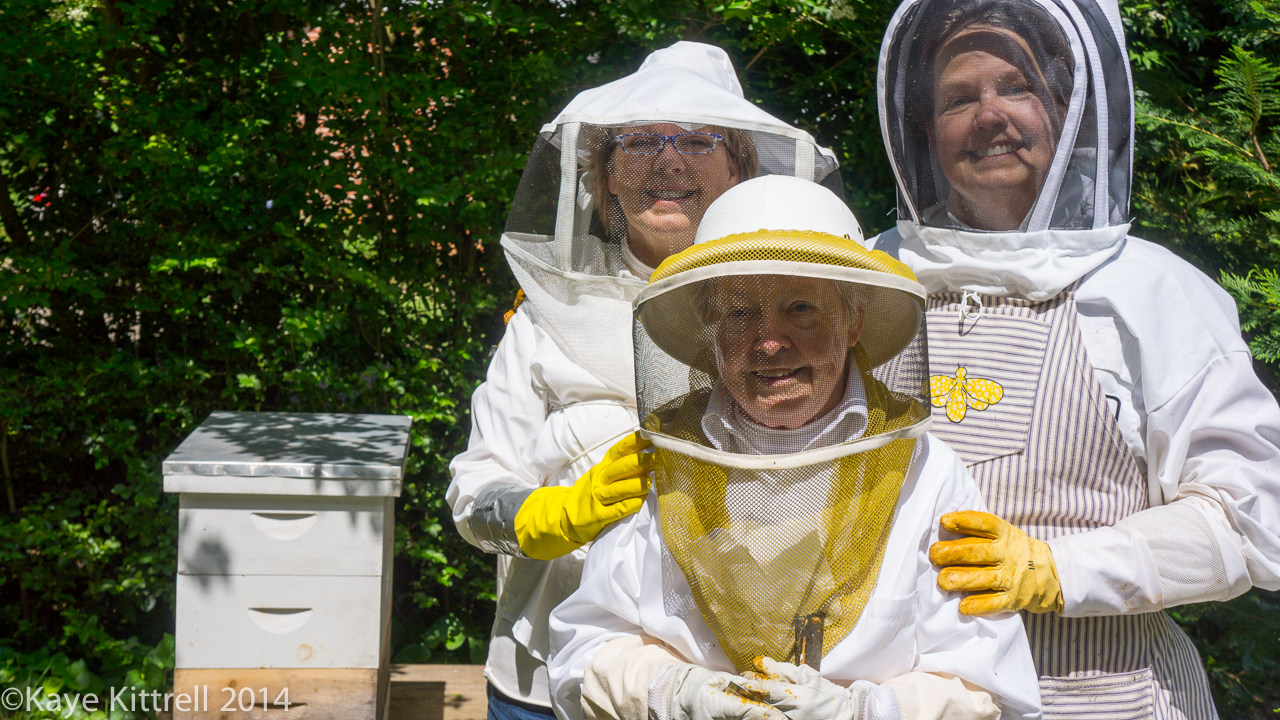
Becoming a late bloomer urban food gardener in 2012 has opened up a whole world to me I never would have imagined. I have gone from zero to 60 in my knowledge, in fact, it’s been the greatest education of my life, and I hope I can continue to share my passion and enthusiasm with more people like the California State Beekeepers. Christine said she wished I was her neighbor!

Are you planting bee-loving plants in your garden? What flowers do bees especially love? Please inform yourself about the plight of the honeybee and ask before you buy nursery plants if they’ve been treated with neonicotinoids. Thanks for reading! – Kaye