Files from the Road: Growing Loofah, third in a series. Ask any five people (I did) and they will tell you they thought loofah sponge came from the sea. Sheri Martin Bulla grows loofah (also spelled luffa) for sponges on a strip of her 30-acre farm out in the country in Hickman County, Tennessee. I drove on chert roads crossing beautiful Big Swan Creek to check out Sheri’s loofah.

The genus of tropical and subtropical vines is actually a member of the cucumber family. Talk about versatile! Eat it when young in stir fry, or let it mature and polish your skin with the skeleton of xylem fibers. From Vietnam to India to the Philippines, loofah is grown as a green vegetable and used in curry, chutney and deep-fried as a snack. When allowed to mature, they become very fibrous. “I call them my babies,” she said to me, as she searched through her vines for some mature sponges.
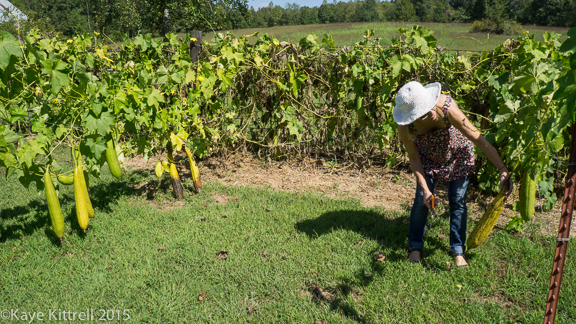
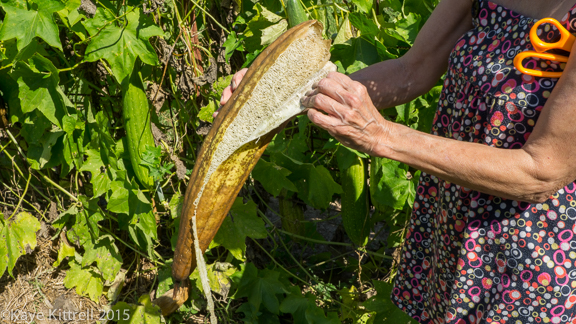
Sheri said to start them indoors in the spring. “Thirteen is my lucky number,” she said, so she starts 13 vines, and plants them out on trellises after the last chance of frost. Once they get going, they really spread out. Luffa likes the heat and needs at least five months of it to mature into sponges. When they are light and start spotting, but before they are dark brown and totally dry, Sheri harvests, peels off the skin and shakes out the seeds.

It peels as easy as a ripe banana, and the sponge encompasses the entire inside of the vegetable. Sheri says not to let the long fruit touch the ground while growing or it can rot.
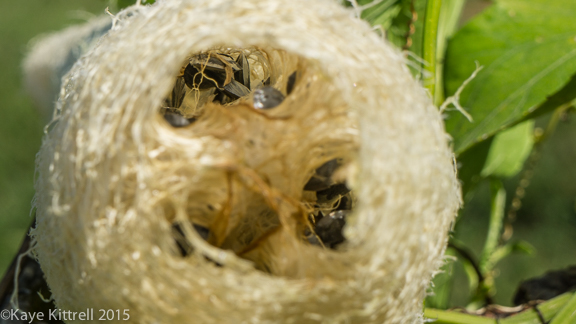
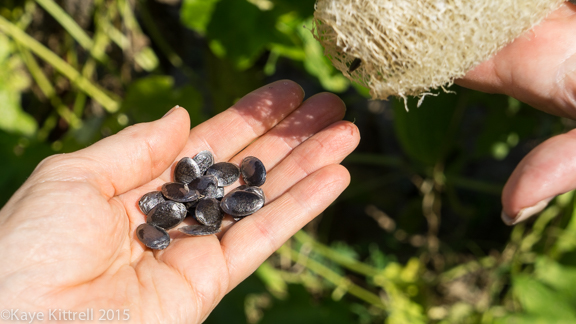
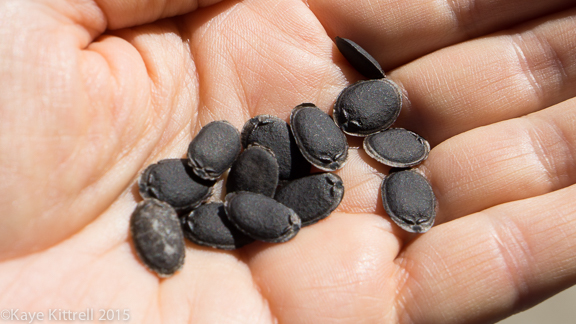
Loofah is loaded with silver-colored seeds which dry to charcoal black.
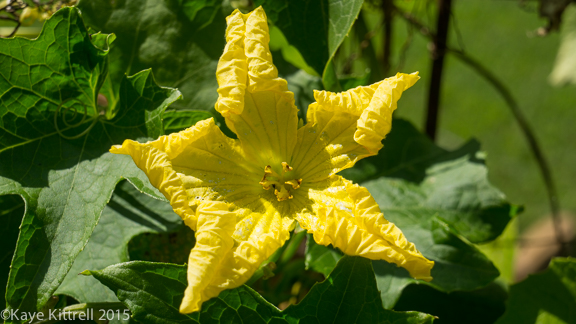
Sheri’s loofah is softer than ones I’ve seen in markets, and I suspect it’s because she peels them before they totally dry on the vine. Still blooming in mid-September, the flowers resemble big cucumber blossoms.
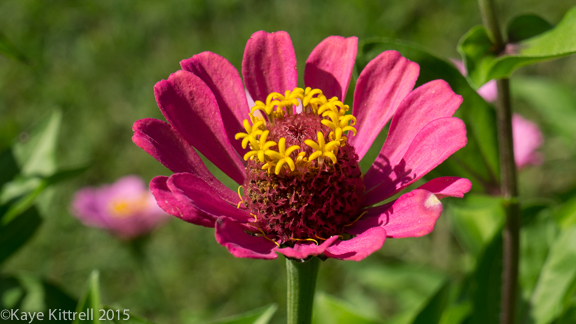
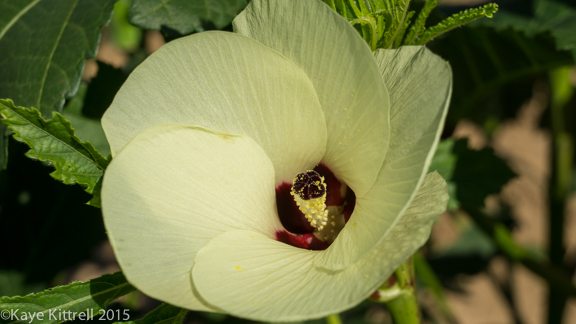
Sheri also had sun-loving zinnias and okra blooming.
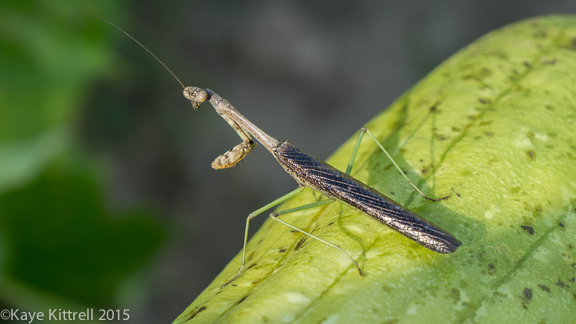
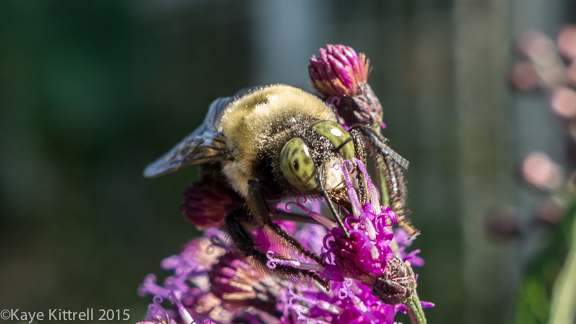
Beneficial insects were hard at work in Sheri’s flower-packed garden.
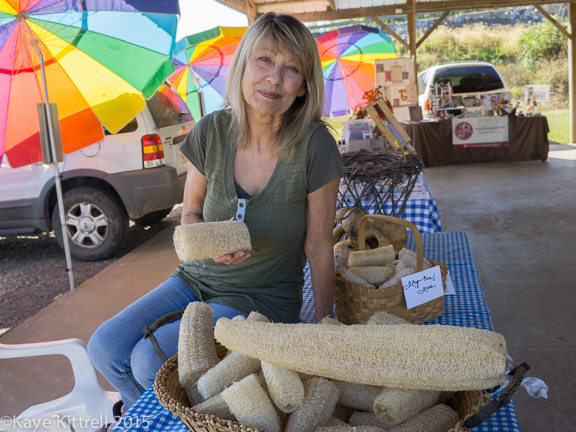
She allows the sponges to dry inside before cutting into sections to sell at the local farmers market.
Sheri had some loose seeds in her bag (which turned out to be 13!) that I will eagerly plant in the spring.
Where did you think loofah came from? Have you grown it? If you enjoyed this post, please let me know. This series is about my musings on the road, interviews with family farmers, and whatever strikes my fancy. Thanks for reading, please subscribe if you haven’t, and share with a friend. Thanks for reading! – Kaye

I receive a small commission for promoting products I’ve used and believe in. Your support of these products helps me to continue to produce “Late Bloomer” episodes to inspire people to grow their own food and take control over their food security. Click button to order products! Thank you!
Help me inspire people to grow their own food and take control over their food security. Your donation of any amount makes “Late Bloomer” possible and available for anyone.
Thank you!