My experience growing True Comfrey has been checkered. Last year, I was perusing the Horizon Herbs website, and became determined to buy a live root of something fabulous. I read about True Comfrey and it had so many positive health benefits, I settled on that. Plus this line really caught my eye.
Herbaceous perennial native to Europe. True Comfrey is the original
medicinal herb as detailed in all the ancient literature.
I’d never ordered any live plant before. I received it on 12/6, and planted within a day or two. I did not photograph the root, but there is wonderful, detailed information and photos here.
The herbs were simple to plant. Just point the root down, keeping the bit of green on top peeking from the surface, cover with mulch in well-drained soil, water and wait. It took a little time to get going, but once it did, it was off to the races!
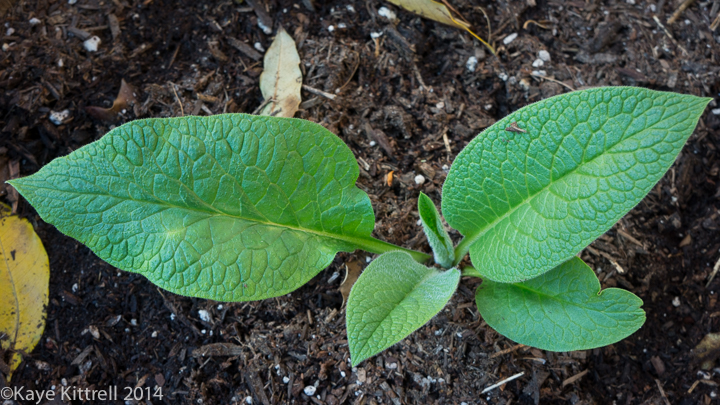
My dilemma was where to plant it. Because I bought the self-seeding True Comfrey, and because it was December and my two large pulp pots for last year’s tomatoes were sitting empty, I planted them there. I thought, this will give me time to find a better home, in the ground. Turns out, True Comfrey doesn’t do well in pots in the long term, as the root wants to push down deep.
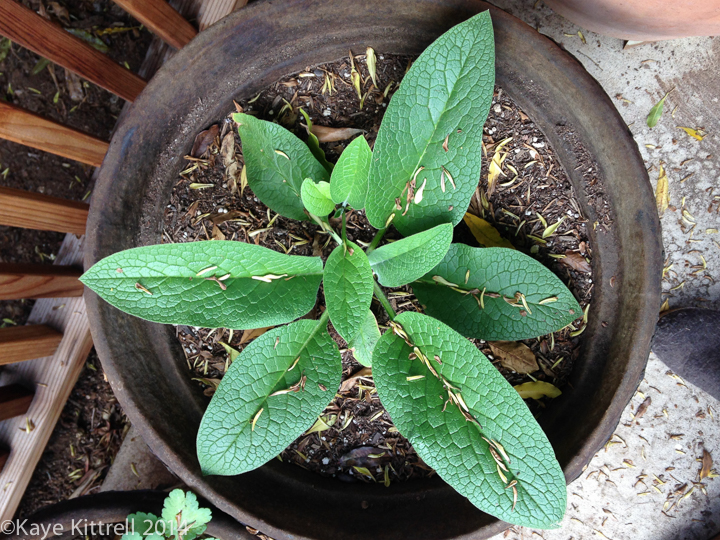
This plant mix I used really suited them well. And, of course, the pots drain well. Two months later, end of March, it was blooming. These blooms look more like the Russian cultivar, than the dark purple bloom on the website, but the root was marked True Comfrey.

You can see the writing on the wall here, that this plant needs more room. It was so healthy, and obviously in the perfect amount of sun, with the right drainage, however, out of necessity, I began to consider where to relocate it.
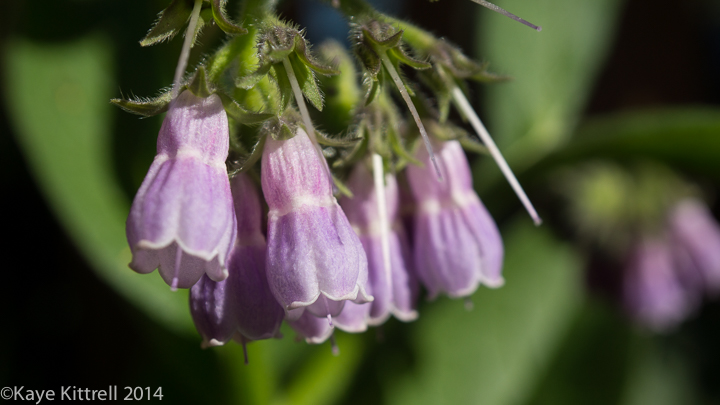
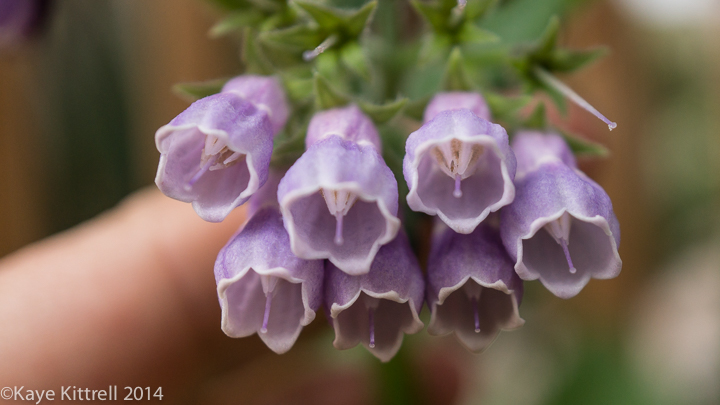
Breathtaking blooms lasted a week or two. When it was finished blooming, I replanted it. After all, it was end of April and I would be needing the pulp pots for tomatoes. Comfrey likes sun/part sun, so it went in ground beside the driveway, with the hope it would spread under the mature pineapple guava trees. Alas, it has suffered in this location. A big chunk broke off when I tried to plant it. What I didn’t realize, you can gently separate the sections of root and I could have propagated it then, when I had the whole mass of roots in my hand.
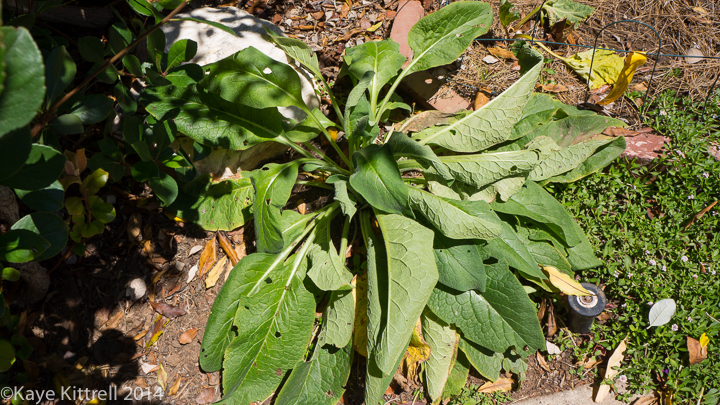
Either the sun is too strong here in summer, or True Comfrey needs a lot of water, because many days I find it wilted. And it is positioned right next to a sprinkler. We have water restrictions in California due to our record drought, so I only turn on the sprinklers twice a week. I have to give this plant a shot with the hose every other day. And some critter loves to munch on it, and the heretofore perfect leaves are full of holes. Since I’m not eating the leaves (that could be toxic), and they ultimately will be used as compost, I don’t want to spray it.
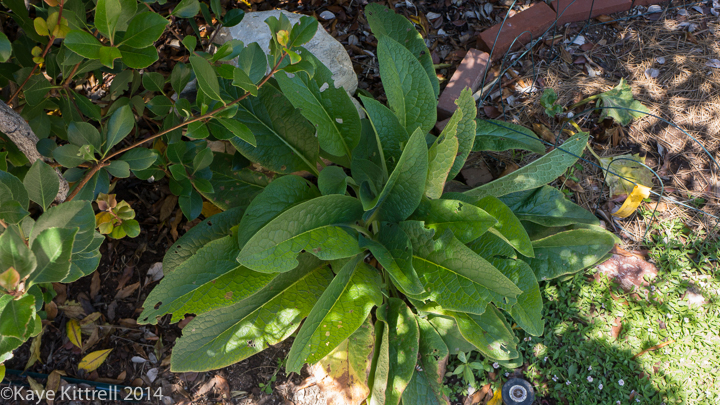
One of the best benefits to comfrey is for fertilizer. A terrific primer using comfrey as fertilizer is at OneYardRevolution. Patrick gives a great deal of good information about how he grows the Bocking 14 Russian cultivar, which does very well in his zone, and uses it mainly for fertilizer. I haven’t given up on comfrey, but I can’t afford to plant it in my raised beds and have it spread, and my urban soil is hard clay. I’ll have to keep experimenting to find the right balance of sun, soil drainage and space to keep this healthy herb happy.
Have you tried planting live roots, or growing medicinal herbs? They’ve been around for thousands of years, or more, bringing health to native peoples. Seems like a win-win to have them growing in our urban gardens.
Find Late Bloomer Show on Facebook, Google+, Instagram, Pinterest. Happy gardening!
If you enjoyed this post, please let me know and share with a friend. Thanks for your support! ~ Kaye

I receive a small commission for promoting products I’ve used and believe in. Your support of these products helps me to continue to produce “Late Bloomer” episodes. Click button to order products! Help me inspire people to grow their own food and take control over their food security. Your donation of any amount makes “Late Bloomer” possible and available for anyone.
Thank you!